

UNSERE NEUHEITEN

K-Gold - Clear Gold Electroplating Solution – for Pen, Bath & Swab Plating (10 g) Professional cyanide-free gold electrolyte for selective and immersion plating The K-Gold electroplating solution is a premium, cyanide-free gold electrolyte designed for pen plating, swab (tampon) plating and bath electroplating. It is ideal for jewellery finishing, repair plating, precision components and controlled gold deposition on small parts. The solution deposits a high-purity gold layer (up to 24 K) with excellent adhesion and uniform thickness. It can be used pure or blended with coloured gold additives to achieve specific karat values and gold shades. Key Features & Benefits High-purity gold electrolyte (≈ 10 g Au/L equivalent) Cyanide-free formulation for safer professional use Suitable for three plating methods: – Pen plating – Swab / tampon plating – Bath (immersion) plating Excellent adhesion on nickel, copper, silver and brass (proper pretreatment required) Soft, burnishable gold deposit with high visual quality Technical Parameters Gold concentration: approx. 10 g/L equivalent Deposit purity: 99.9–100 % gold Operating voltage: – Pen / swab plating: from 3.5 V – Bath plating: 3 V (current-controlled recommended) begin with 0,1 Ampere pro cm2 Temperature: 20–25 °C Recommended anode: Carbon or platinised titanium (bath) Hardness: approx. 170–180 HV Density: approx. 19.0 g/cm³ Pen Plating Application Ideal for localised plating, repairs and touch-ups. Clean, degrease and activate surface Load plating pen or swab with K-Gold solution Apply 2–3.5 V Move evenly across the surface to build the layer Swab / Tampon Plating Application Best for controlled selective plating on larger areas. Soak swab with electrolyte Maintain gentle, even contact Keep voltage stable Repeat passes to achieve desired thickness Bath Plating Application For uniform full-surface gold plating of small components. Thorough surface preparation Fill plating bath with K-Gold solution Use carbon or platinised titanium anode Apply low current density at 2–4 V Rinse and dry after plating Notes Air-sensitive – reseal container immediately after use Can be mixed with gold colour additives for karat matching Suitable for decorative and functional gold coatings
Content: 0.05 Liter (€1,900.00 / 1 Liter)

Nickel Anode / Plate Electrode (SW10083) Short Description The Nickel Anode / Plate Electrode with the soze of 100 x 60 x 0,6 mm is a high‑purity, flat nickel sacrificial anode designed for electroplating applications. It provides controlled nickel ion supply to the plating bath, ensuring stable processes and uniform nickel deposits — perfect for bath, pen and pad plating setups. Product Description This nickel plate electrode is made from high‑purity nickel (approx. 99.8 %) and serves as a sacrificial anode in electroplating. Its flat, broad design offers a large contact area in the electrolyte, promoting even current distribution, consistent metal release and reproducible plating results. Nickel anodes are commonly used to maintain a stable nickel ion concentration in the bath, reduce porosity, and act as a barrier layer before additional coatings like gold or chrome. Typical Applications Electroplating and nickel plating of metal parts Bath electroplating for decorative and protective nickel layers Barrier layers before further plating processes Workshop, laboratory and production electroplating Use in corrosion‑resistant contact applications Key Benefits High purity (~99.8 %): ensures clean nickel ion release Large surface area: promotes even current distribution in the bath Stable plating conditions: supports reproducible nickel deposits Improved adhesion and quality: suitable for both decorative and functional finishes Easy to use: flat shape fits standard plating tanks Usage Instructions Preparation: Clean, degrease and activate workpieces before plating. Setup: Place the nickel anode as the positive electrode (anode) in the electrolyte. Power connection: Connect the nickel anode to the positive terminal and the workpiece to the negative terminal (cathode). Plating: Operate within the recommended voltage and temperature ranges for your nickel electrolyte to achieve uniform layers. Maintenance: Periodic cleaning after extended use helps maintain performance. Conclusion The Nickel Anode / Plate Electrode is a robust and versatile accessory for nickel electroplating processes, offering a wide active surface, high purity and stable ion supply — ideal for bath, pen and pad plating across workshop, lab and production environments.

Nickel Flat Anode 170 × 30 mm – Nickel Electrode for ElectroplatingFlat Nickel Anode for Professional Electroplating ApplicationsThe Nickel Flat Anode 170 × 30 mm is a flat nickel electrode designed for suitable electroplating applications. It serves as an anode in compatible nickel electrolytes and can help replenish nickel ions in plating baths designed for soluble nickel anodes.Whether you work in a professional workshop, laboratory or metal finishing environment, this nickel plate electrode is a practical component for compatible nickel plating systems.Betzmann Galvanik supplies electroplating products and accessories for a wide range of metal finishing processes, including nickel, gold, silver and other metal coatings.Key Product FeaturesFlat nickel electrode: 170 × 30 mmFor compatible nickel electrolytes: designed for suitable electroplating systemsCompact plate design: practical for compatible plating setupsVersatile applications: suitable for workshops, laboratories and metal finishing environmentsElectroplating supplies from a specialist: available online from Betzmann GalvanikWhat Is a Nickel Anode Used For?Nickel electroplating uses an electric current to deposit a layer of nickel onto a suitable workpiece.In a compatible plating bath, the nickel anode is connected to the positive terminal of the power supply. When a soluble nickel anode is used under suitable operating conditions, nickel dissolves into the electrolyte and helps replenish the nickel ions consumed during plating.The correct combination of anode material, electrolyte composition, current density and surface preparation is essential for a controlled electroplating process.Typical Applications of the Nickel Flat AnodeThis nickel electrode is intended for suitable applications involving:Nickel electroplating of compatible metal surfacesElectroplating baths designed for nickel anodesProduction of galvanic nickel coatingsMetal finishing and surface treatmentWorkshop, laboratory and development applicationsNickel undercoats for subsequent metal plating, where the process is suitableCompatibility depends on the electrolyte formulation and the requirements of the specific plating process.Nickel Coatings as Intermediate or Barrier LayersNickel coatings are used in electroplating for both decorative and functional purposes. Depending on the substrate and process, a nickel layer may also serve as an intermediate coating beneath another metal finish.For example, a properly applied nickel layer can act as a diffusion barrier beneath a gold coating in suitable applications.The final coating quality depends on proper surface preparation, compatibility between the coating layers and correct process parameters.How to Use the Nickel AnodeIn a compatible electroplating system, connect the nickel anode to the positive terminal (+) of the DC power supply. The workpiece to be plated acts as the cathode and is connected to the negative terminal (−).Before plating, thoroughly clean and degrease the workpiece. Depending on the base material and process, additional surface activation may be required.Follow the technical instructions for the nickel electrolyte regarding current density, operating temperature, electrode spacing and anode material.Important: Not every nickel electrolyte is designed for use with a soluble nickel anode. Always check the electrolyte manufacturer's instructions before use.Technical SpecificationsProduct: Nickel flat anode / nickel plate electrodeMaterial: NickelDimensions: 170 × 30 mmShape: Flat plateApplication: Electroplating with a compatible nickel electrolyteProduct number: SW10082The exact nickel purity and material thickness should be confirmed against the specifications of the supplied product.Nickel Anodes and Electroplating Supplies from Betzmann GalvanikLooking for a nickel anode for your electroplating setup or additional supplies for metal finishing?Betzmann Galvanik offers products for a variety of electroplating processes, including nickel, gold, silver, copper and other metal coatings.Order your Nickel Flat Anode 170 × 30 mm online from Betzmann Galvanik and find suitable electrodes, electrolytes and accessories for your electroplating applications.
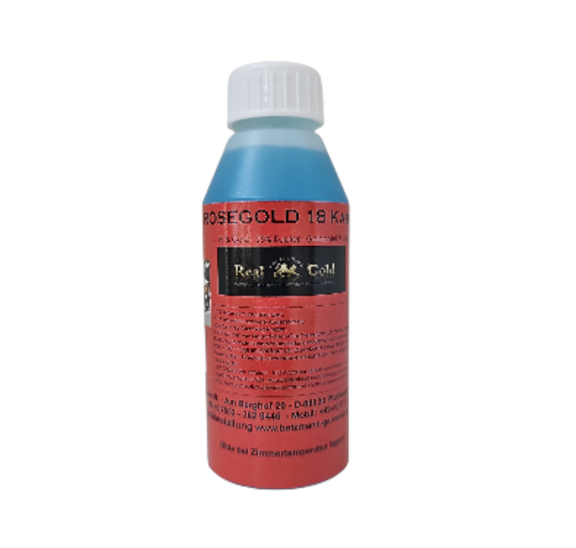
18K Rose Gold Electrolyte – Professional Rose Gold Plating Solution (4.0 g/L Au)Premium 18K Rose Gold Electrolyte for Brilliant Rose Gold and Red Gold PlatingThe 18K Rose Gold Electrolyte is a premium, ready-to-use rose gold plating solution designed for depositing elegant 18-karat rose gold and red gold coatings. This neutral gold electrolyte operates without free cyanide, features a stable pH value, and produces uniform, high-gloss, and highly adherent gold-copper alloy coatings.The balanced gold-copper alloy creates the characteristic warm rose gold color that is highly valued in jewelry manufacturing, luxury goods, and premium decorative finishing. The deposited coatings offer excellent hardness, outstanding wear resistance, and very good corrosion and tarnish resistance.With a gold content of 4.0 g/L Au and 3.0 g/L copper, the electrolyte produces brilliant rose gold coatings with thicknesses of up to 10 µm under optimum operating conditions.The electrolyte is suitable for both decorative and technical applications and can be used for tank plating, pen plating, and brush plating.ApplicationsThe 18K Rose Gold Electrolyte is ideal for:JewelryRingsNecklacesPendantsBraceletsEarringsWatches and watch componentsEyewear framesLuxury accessoriesDesigner productsDecorative metal finishingPremium surface finishingPrecision engineering componentsSuitable for:JewelersGoldsmithsJewelry manufacturersElectroplating companiesWatchmakersIndustrial applicationsProfessional workshopsProduct BenefitsReady-to-use 18K Rose Gold Electrolyte4.0 g/L Gold (Au)3.0 g/L Copper (Cu)Neutral electrolyteFree from free cyanideElegant warm rose gold finishBright, high-gloss coatingExcellent adhesionHigh hardnessOutstanding wear resistanceExcellent corrosion resistanceVery good tarnish resistanceCoating thickness up to 10 µmSuitable for decorative and technical applicationsCompatible with tank plating, pen plating, and brush platingProfessional electroplating qualitySuitable Base MaterialsThe electrolyte is suitable for a wide variety of metallic substrates and properly prepared electroplated surfaces.Suitable materials include:GoldSilverCopperBrassBronzeNickelPalladiumStainless steel (with appropriate pre-treatment)Suitable electroplated intermediate layersFor optimum adhesion and coating quality, all workpieces should be thoroughly cleaned, degreased, rinsed, and activated before plating.Technical SpecificationsProduct Type18K Rose Gold ElectrolyteGold Content4.0 g/L Au (3.5–4.5 g/L)Copper Content3.0 g/L Cu (2.5–3.5 g/L)pH Value7.5 (7.2–8.0)Density1.07 g/mlRecommended Operating ConditionsParameterValueVoltage1.6 Volts (1.4–1.8 V)Bath Temperature57 °C (55–60 °C)Electrode MaterialGraphite or Platinum ElectrodesAnode/Cathode RatioApprox. 2:1Workpiece AgitationRequiredCurrent DensityApprox. 0.3 A/dm² (0.1–0.5 A/dm²)Deposition RateApprox. 45 mg/A·minDeposition SpeedApprox. 0.1 µm/minBath FiltrationRecommended for bath volumes above 10 litersCoating PropertiesThe deposited gold-copper alloy provides:Elegant warm rose gold finishBrilliant high-gloss appearanceExcellent adhesionHigh hardnessOutstanding wear resistanceExcellent corrosion resistanceVery good tarnish resistanceUniform coating thicknessLong-lasting decorative finishDeposit CharacteristicsHardness: 380–400 HVMaximum Coating Thickness: Up to 10 µmTank Plating, Pen Plating or Brush Plating?The 18K Rose Gold Electrolyte is suitable for multiple electroplating methods.Tank PlatingIdeal for:Complete workpiecesBatch productionUniform coatingsHigher coating thicknessesPen PlatingIdeal for:RepairsSelective gold platingSmall surface areasTouch-up workBrush PlatingIdeal for:Large componentsLocalized platingFixed assembliesOn-site repairsProcessing RecommendationsFor optimum plating performance, all workpieces should be thoroughly cleaned, degreased, rinsed, and activated before electroplating. Maintaining the recommended operating parameters ensures uniform coating thickness, excellent adhesion, and a consistent rose gold color.Changes in voltage, temperature, or current density may influence the final color, coating thickness, and surface quality.Available VersionReady-to-Use 18K Rose Gold Electrolyte – 4.0 g/L AuQuality from Betzmann GalvanikBetzmann Galvanik develops premium precious metal electrolytes for professional electroplating applications in jewelry manufacturing, watchmaking, luxury goods, industrial finishing, and precision engineering.Our rose gold electrolytes are manufactured to the highest quality standards, ensuring excellent process stability, consistent plating performance, and brilliant 18K rose gold coatings with exceptional durability and premium appearance.
Content: 0.05 Liter (€980.00 / 1 Liter)
Nickel Anode / Plate Electrode (SW10081) Short Description The Nickel Anode / Plate Electrode with the soze of 150 x 25 x 1 mm is a high‑purity, flat nickel sacrificial anode designed for electroplating applications. It provides controlled nickel ion supply to the plating bath, ensuring stable processes and uniform nickel deposits — perfect for bath, pen and pad plating setups. Product Description This nickel plate electrode is made from high‑purity nickel (approx. 99.8 %) and serves as a sacrificial anode in electroplating. Its flat, broad design offers a large contact area in the electrolyte, promoting even current distribution, consistent metal release and reproducible plating results. Nickel anodes are commonly used to maintain a stable nickel ion concentration in the bath, reduce porosity, and act as a barrier layer before additional coatings like gold or chrome. Typical Applications Electroplating and nickel plating of metal parts Bath electroplating for decorative and protective nickel layers Barrier layers before further plating processes Workshop, laboratory and production electroplating Use in corrosion‑resistant contact applications Key Benefits High purity (~99.8 %): ensures clean nickel ion release Large surface area: promotes even current distribution in the bath Stable plating conditions: supports reproducible nickel deposits Improved adhesion and quality: suitable for both decorative and functional finishes Easy to use: flat shape fits standard plating tanks Usage Instructions Preparation: Clean, degrease and activate workpieces before plating. Setup: Place the nickel anode as the positive electrode (anode) in the electrolyte. Power connection: Connect the nickel anode to the positive terminal and the workpiece to the negative terminal (cathode). Plating: Operate within the recommended voltage and temperature ranges for your nickel electrolyte to achieve uniform layers. Maintenance: Periodic cleaning after extended use helps maintain performance. Conclusion The Nickel Anode / Plate Electrode is a robust and versatile accessory for nickel electroplating processes, offering a wide active surface, high purity and stable ion supply — ideal for bath, pen and pad plating across workshop, lab and production environments.

Flat Zinc Anode 100 × 50 × 1 mm – Zinc Electrode for ElectroplatingZinc Flat Anode for Zinc ElectroplatingThe Flat Zinc Anode 100 × 50 × 1 mm is a compact zinc electrode designed for electroplating applications using suitable zinc plating electrolytes. Its flat plate design makes it a practical choice for zinc electroplating setups in workshops, laboratories and hobby plating environments.Whether you are working on metal finishing, restoration, model making or other electroplating projects, this zinc anode is a useful component for compatible zinc plating systems.Product BenefitsCompact flat design: 100 × 50 × 1 mmZinc electrode: designed for use with suitable zinc electrolytesSpace-saving dimensions: suitable for compact electroplating baths and experimental setupsVersatile applications: for workshops, laboratories and hobby electroplatingElectroplating accessories: available from Betzmann GalvanikWhat Is a Zinc Anode Used For?In zinc electroplating, an electric current is used to deposit a layer of zinc onto a suitable metal surface. The zinc anode serves as the positive electrode. In compatible electroplating systems, zinc can dissolve from the anode and replenish zinc ions in the electrolyte.The correct anode material, electrolyte composition and operating parameters are essential for a controlled electroplating process.Typical ApplicationsThis flat zinc electrode is intended for suitable applications involving:Zinc electroplating in plating bathsGalvanic zinc coating of suitable metal componentsMetal finishing and surface treatmentWorkshop and laboratory electroplatingRestoration and model-making projectsCompatibility depends on the zinc electrolyte and the specific plating process.How to Use the Zinc Flat AnodeWhen used in a compatible electroplating bath, connect the zinc anode to the positive terminal (+) of the DC power supply. Connect the workpiece to be plated to the negative terminal (−), making it the cathode.Before plating, thoroughly clean and degrease the workpiece. Follow the operating instructions for the zinc electrolyte, including the recommended current density, voltage and electrode positioning.Use this zinc anode only with electrolytes designed for zinc anodes. Ensure secure electrical connections and follow the relevant product safety instructions.Technical SpecificationsProduct: Flat zinc anodeMaterial: ZincLength: 100 mmWidth: 50 mmThickness: 1 mmApplication: Zinc electroplating with a compatible electrolyteDesign: Flat plate electrodeZinc Electroplating Accessories from Betzmann GalvanikBetzmann Galvanik offers electroplating products and accessories for a wide range of metal finishing applications, including zinc, gold, silver and copper plating.Order your Flat Zinc Anode 100 × 50 × 1 mm online from Betzmann Galvanik and equip your electroplating setup with a compact zinc electrode for compatible plating baths.
Flat Zinc Anode 100 × 50 × 1 mm – Zinc Electrode for ElectroplatingZinc Flat Anode for Zinc ElectroplatingThe Flat Zinc Anode 100 × 50 × 1 mm is a compact zinc electrode designed for electroplating applications using suitable zinc plating electrolytes. Its flat plate design makes it a practical choice for zinc electroplating setups in workshops, laboratories and hobby plating environments.Whether you are working on metal finishing, restoration, model making or other electroplating projects, this zinc anode is a useful component for compatible zinc plating systems.Product BenefitsCompact flat design: 100 × 50 × 1 mmZinc electrode: designed for use with suitable zinc electrolytesSpace-saving dimensions: suitable for compact electroplating baths and experimental setupsVersatile applications: for workshops, laboratories and hobby electroplatingElectroplating accessories: available from Betzmann GalvanikWhat Is a Zinc Anode Used For?In zinc electroplating, an electric current is used to deposit a layer of zinc onto a suitable metal surface. The zinc anode serves as the positive electrode. In compatible electroplating systems, zinc can dissolve from the anode and replenish zinc ions in the electrolyte.The correct anode material, electrolyte composition and operating parameters are essential for a controlled electroplating process.Typical ApplicationsThis flat zinc electrode is intended for suitable applications involving:Zinc electroplating in plating bathsGalvanic zinc coating of suitable metal componentsMetal finishing and surface treatmentWorkshop and laboratory electroplatingRestoration and model-making projectsCompatibility depends on the zinc electrolyte and the specific plating process.How to Use the Zinc Flat AnodeWhen used in a compatible electroplating bath, connect the zinc anode to the positive terminal (+) of the DC power supply. Connect the workpiece to be plated to the negative terminal (−), making it the cathode.Before plating, thoroughly clean and degrease the workpiece. Follow the operating instructions for the zinc electrolyte, including the recommended current density, voltage and electrode positioning.Use this zinc anode only with electrolytes designed for zinc anodes. Ensure secure electrical connections and follow the relevant product safety instructions.Technical SpecificationsProduct: Flat zinc anodeMaterial: ZincLength: 100 mmWidth: 50 mmThickness: 1 mmApplication: Zinc electroplating with a compatible electrolyteDesign: Flat plate electrodeZinc Electroplating Accessories from Betzmann GalvanikBetzmann Galvanik offers electroplating products and accessories for a wide range of metal finishing applications, including zinc, gold, silver and copper plating.Order your Flat Zinc Anode 100 × 50 × 1 mm online from Betzmann Galvanik and equip your electroplating setup with a compact zinc electrode for compatible plating baths.

Electroplating Pen Set for Pen / Pad Electroplating - Brush Plating The set consists of: 1x Hand electroplating handle made of high-quality brass - insulated - for various electrodes up to 6mm with quick release fastener Rear connection for measuring cable - front connection for electrodes up to 6mm 1x Lead PLUS1x Lead MINUS with crocodile clip1x stainless steel electrode 6 mm for degreasing, dechroming, activating, chrome plating1x graphite electrode 6 mm for silver plating, gold plating, palladium, platinum, black nickel, and much more.

40A Electroplating Power Supply – Maximum Power for Professional Plating The 40A electroplating power supply (analog lab unit) is a high-performance control system for demanding electroplating applications. With its powerful current output and stable voltage regulation, it enables uniform, high-quality coatings on both small and large components. This is the ideal solution when standard 10A or 20A units are no longer sufficient. 40 Amps – The Key Advantage Unlike low-power devices, this unit delivers: up to 40A continuous output (approx. 43A peak) adjustable voltage range: 3 – 15 V clean, stable DC output for consistent plating Perfect for large surfaces, faster deposition rates, and industrial-level performance. Why Power Matters in Electroplating The power supply directly controls: coating thickness adhesion quality surface finish and brightness uniformity of the deposit With 40A, you achieve: faster plating processes stable current delivery without drops superior results on large workpieces No Size Limitation This power supply allows you to plate: small parts such as jewelry or screws large components like pipes, structures, or panels One system for unlimited application sizes. Compatible Plating Methods Pen Plating – precise localized work Brush / Tampon Plating – flexible surface coating Bath Plating – uniform production plating Suitable for hobby, professional, and industrial use. Compatible Plating Materials Supports all major electroplating electrolytes: Gold (24K to 9K, white gold, rose gold) Silver Nickel Copper (acid & alkaline systems) Chrome & black chrome Rhodium & black rhodium Palladium, platinum, zinc, tin Fully compatible with advanced electroplating systems. Technical Highlights Output current: 40A continuous / ~43A peak Voltage range: 3 – 15 V adjustable Analog display for current and voltage Very low ripple (< 50 mV) → clean plating results Temperature-controlled cooling fan Robust metal housing Weight: approx. 3.5 kg Safety & Reliability Overload protection Overtemperature protection Short-circuit protection Reverse polarity protection Designed for continuous professional operation. Typical Applications Gold plating large components Copper and nickel plating Restoration (automotive, decorative parts) Industrial surface finishing Coating complex geometries Why Choose an Analog Power Supply? Many professionals prefer analog systems because they offer: instant response and control high durability no digital delay reliable long-term performance Ideal for precise manual electroplating processes. Quick Start Guide Connect the workpiece (cathode) Connect the anode Select the electrolyte Adjust voltage and current Start plating and fine-tune as needed High power = greater control and better results Conclusion – Professional Plating Starts with the Right Power Supply The 40A electroplating power supply is not just a tool—it is the core of your entire plating process. It determines: coating quality process stability production efficiency If you want professional, large-scale, and high-performance electroplating, this is the right choice. Buying Argument (Conversion Booster) Serious about electroplating? A 40A power supply is not an upgrade – it’s the difference between hobby and professional results. Upgrade Path Entry level: 10A power supplies Advanced: 20–25A systems Professional: 40A and above

25A Electroplating Power Supply – The Perfect Balance Between Performance and Control The 25A electroplating power supply (analog laboratory unit) is the ideal solution for users who need reliable power, precise control, and versatile application options. It offers the perfect balance between entry-level usability and professional performance, making it suitable for both beginners and advanced users. This is the most practical and widely used power class in electroplating. 25 Amps – The Optimal Power Range With up to 25A continuous output (approx. 28A peak), this unit provides: stable plating conditions uniform coating thickness reliable performance even on larger surfaces Perfect for workshops, small production, and professional applications. Precision Control for Perfect Results Voltage range: 3 – 15 V adjustable Optional: 13.8 V fixed output mode Analog display for voltage and current This allows precise control over: coating thickness adhesion quality surface finish A stable power supply is essential for consistent, high-quality plating results. No Size Limitation With this power supply, you can plate: small parts (jewelry, screws) large components (pipes, structures, panels) One system for all sizes and applications. Compatible Plating Methods Pen Plating – precise localized repairs Brush / Tampon Plating – flexible surface coating Bath Plating – uniform production plating Suitable for hobby, professional, and industrial use. Compatible Plating Materials Supports a wide range of electroplating electrolytes: Gold (24K to 9K, white gold, rose gold) Silver Nickel Copper (acid & alkaline systems) Chrome & black chrome Rhodium & black rhodium Palladium, platinum, zinc, tin Fully compatible with modern electroplating systems. Technical Highlights Output current: 25A continuous / ~28A peak Voltage: 3 – 15 V adjustable Power: approx. 375 W Very low ripple (<50 mV) → clean plating results Analog meters for voltage and current Fan-cooled system Robust metal housing Weight: approx. 2.7 kg Safety & Reliability Overload protection Overtemperature protection Short-circuit protection Reverse polarity protection Designed for continuous and reliable operation. Why Choose This 25A Power Supply? Compared to smaller units, 25A offers: higher process stability better results on medium to large surfaces faster deposition rates fewer plating defects The perfect “sweet spot” between entry-level and professional systems. Typical Applications Gold plating jewelry and components Copper and nickel plating Chrome plating automotive parts Restoration and refinishing Industrial and technical coatings Quick Start Guide Connect the workpiece (cathode) Connect the anode Select the electrolyte Adjust voltage and current Start plating and fine-tune as needed Precise control ensures optimal coating performance. Conclusion – The All-Rounder for Electroplating The 25A electroplating power supply is the ideal choice for users who want: professional results flexible application reliable performance It is the most commonly used power level in electroplating, offering the perfect mix of power and control. Buying Argument If you want one device that covers almost everything: 25A is the perfect choice – powerful, precise, and future-proof. Entry level: 10A power supplies Advanced: 25A systems High-performance: 40A and above
UNSERE BESTSELLER

Silver Electrolyte 30 g/L – Premium Silver Plating Solution for Tank, Pen & Brush PlatingProfessional Silver Electrolyte for Bright, Conductive and High-Quality Silver CoatingsThe Silver Electrolyte 30 g/L from Betzmann Galvanik is a premium, ready-to-use electroplating solution developed for depositing high-purity silver coatings on conductive metal surfaces. With a silver concentration of 30 grams per litre, this electrolyte provides fast deposition rates, brilliant finishes and outstanding electrical conductivity.The electrolyte is suitable for tank plating, pen plating and brush plating (swab plating), delivering professional results for both decorative and technical applications. Whether you are plating jewellery, electronic components, electrical contacts, cutlery or restoration projects, this silver plating solution produces uniform, highly adherent and durable silver deposits.Your Advantages at a Glance30 g of silver per litreReady-to-use professional electrolyteSuitable for tank plating, pen plating and brush platingBright, uniform silver depositsOutstanding electrical and thermal conductivityExcellent adhesionEven metal depositionSuitable for decorative and technical applicationsIdeal for hobbyists, workshops and industrial usersPremium quality from Betzmann GalvanikWhy Electroplate with Silver?Silver offers the highest electrical conductivity of all metals, combined with excellent thermal conductivity and an attractive bright white appearance. It is one of the most widely used precious metals in electroplating for both decorative and functional applications.Silver plating is commonly used for:Decorative finishesElectrical contactsPrinted circuit boards (PCBs)Connectors and terminalsJewelleryWatchesCutleryMusical instrumentsPrecision componentsRestoration workIn addition to its elegant appearance, a silver coating significantly improves conductivity while providing excellent wear resistance and protection against oxidation.Suitable Base MaterialsThe Silver Electrolyte is suitable for plating:CopperBrassBronzeNickelSteel (with appropriate pre-treatment)Stainless steel (after Nickel Strike activation)SilverCopper-plated componentsDepending on the substrate, we recommend using the appropriate activator or intermediate layer to achieve maximum adhesion.Recommended Plating StructureFor maximum durability and long-term colour stability, the following plating sequence is recommended:Base Material → Copper → Nickel → SilverThe nickel layer acts as a diffusion barrier, preventing copper migration into the silver coating and ensuring a bright, tarnish-resistant finish.Typical ApplicationsIdeal for:Jewellery manufacturingJewellery repairWatchmakingElectronicsPrinted circuit boards (PCBs)Electrical contactsConnectorsMusical instrumentsRestorationClassic carsModel makingLaboratoriesIndustrial electroplatingProfessional metal finishingApplicationBefore silver plating:Thoroughly clean and degrease the workpiece.Remove all oxide layers.Activate the surface according to the base material.During plating:For tank plating, immerse the workpiece completely in the electrolyte.For pen plating or brush plating, keep the electrode moving continuously across the surface to ensure uniform metal deposition.After plating, rinse the workpiece thoroughly with clean water and dry completely.Technical SpecificationsSilver concentration: 30 g/LOperating temperature: 15–30 °CpH value: Slightly acidic to neutralCurrent density: 0.5–3 A/dm²Tank plating voltage: Approx. 1.5–3.5 VPen & brush plating voltage: Approx. 3–7 VRecommended anodes: Platinum, graphite or silverCoating thickness: Approx. 1–5 µm (depending on plating time)Deposit purity: >99.9% silverThe above parameters are recommended values and may vary depending on workpiece geometry, electrode spacing and plating equipment.Safety InformationWear protective gloves and safety goggles.Avoid skin and eye contact.Use only in well-ventilated areas.Keep out of reach of children.Always follow the Safety Data Sheet (SDS).Quality from Betzmann GalvanikThe Silver Electrolyte 30 g/L from Betzmann Galvanik has been developed to meet the highest standards in modern electroplating. Its high silver concentration, excellent conductivity and easy handling make it ideal for decorative silver plating as well as demanding industrial applications. Combined with Betzmann Galvanik power supplies, electrodes and accessories, it delivers brilliant, durable and professional silver finishes every time.
Content: 0.05 Liter (€180.00 / 1 Liter)

The Ideal Introduction to Portable Pen PlatingThis battery-powered pen plating kit is the perfect solution for anyone looking to get started with selective gold plating, silver plating, and other decorative electroplating applications. Its compact design and battery operation allow you to carry out professional electroplating work anywhere—without the need for an external power supply.The kit is ideal for jewelry plating, selective repairs, restoration work, watch components, coins, electrical contacts, electronic parts, and dental applications. It allows precise plating of small areas without immersing the entire workpiece in a plating bath.The battery-powered plating pen operates within a voltage range of 3.0 to 5.0 Volts and is compatible with a wide range of Betzmann Galvanik pen plating solutions.Portable and Ready to Use AnywhereThanks to its battery-powered operation, the pen plating kit is lightweight, portable, and easy to use in workshops, retail stores, repair shops, exhibitions, or on-site service applications. No external rectifier or power supply is required.Important Information About Gold Layer ThicknessThe battery-powered plating pen is designed primarily for decorative plating, touch-up work, repairs, and selective electroplating.Due to its limited output power, it is not intended for depositing gold layers thicker than approximately 2.5 microns (Vermeil standard).If thicker gold deposits or high-volume plating applications are required, we recommend using a professional tank plating system.Crocodile Clip ProtectionThe kit includes a protective cover for the crocodile clip.When the plating pen is not in use, simply place the protector over the crocodile clip. This prevents accidental contact between the clip and the pen electrode, helping to avoid unnecessary battery discharge during storage.Batteries Not IncludedThe plating pen requires three standard AAA batteries, which are not included with the product.Compatible with Numerous Pen Plating SolutionsThe battery-powered plating pen can be used with many Betzmann Galvanik pen plating electrolytes, including solutions for:Gold PlatingSilver PlatingRhodium PlatingBlack Rhodium PlatingPalladium PlatingPlatinum PlatingRuthenium PlatingCopper PlatingNickel PlatingChromium PlatingCobalt PlatingWhen used with suitable alloy or colour plating solutions, the pen can also produce decorative finishes such as rose gold and other gold shades.Please note: The plating pen operates at 3.0–5.0 Volts. Always ensure that the selected pen plating solution is suitable for operation within this voltage range.Suitable ApplicationsIdeal for:Jewelry manufacturingJewelry repairWatchmakingGoldsmithsSilversmithsElectronics repairPCB repairElectrical contactsDental laboratoriesCoin restorationDecorative metal finishingSelective electroplatingRestoration workHobby and professional applicationsImportant NoticeThis battery-powered pen plating kit is designed exclusively for electrically conductive surfaces.Non-conductive materials such as plastic, glass, ceramic, wood, or resin must first be made electrically conductive before they can be electroplated.Quality from Betzmann GalvanikThe Betzmann Galvanik Battery-Powered Pen Plating Kit offers a simple, portable, and professional solution for selective electroplating. Whether for repairs, restoration, jewelry production, or decorative finishing, it provides reliable plating results wherever mobility and precision are required.

Beaker ring for holding the electrodes Beaker ring for holding the electrodes for our tank plating process. It comes in 2 sizes according to the volume of your Plating Beaker; 250ml - 7 cm diameter - for 2 Electrodes 500ml - 9 cm Diameter - for 4 Electrodes The Betzmann Galvanik tank plating process has been designed to provide the greatest degree of flexibity for our customers. It allows you to plate a wide range of differently sized objects with a variety finishes. Pictured is one of our 1 Litre electrode rings fitted into a 1 Litre Plating Beaker with the full quota of 6 copper electrodes for tank plating and the corresponding number of our Sleeves. Features Benefits Electrodes interchangeable between Brush and Beaker for the 250ml, 500ml and 1 Litre Electrode Ring Greater flexibility Made from non-corrosive materials Will maintain good conductivity at all times Features six threaded sockets to take six of our electrodes for tank plating Allows for greater flexibility as you can swap your electrodes around easily to accommodate differently sized and shaped objects Electrode Ring Properties Available electrode slots Slot diameter Ring OutsideDiameter 250ml Ring 2 6mm 69mm 500ml Ring 4 6mm 91mm 1 litre Ring 4 – 6 6mm 104mm 2 litre Ring 4 – 8 6mm 130mm
25A Electroplating Power Supply – The Perfect Balance Between Performance and Control The 25A electroplating power supply (analog laboratory unit) is the ideal solution for users who need reliable power, precise control, and versatile application options. It offers the perfect balance between entry-level usability and professional performance, making it suitable for both beginners and advanced users. This is the most practical and widely used power class in electroplating. 25 Amps – The Optimal Power Range With up to 25A continuous output (approx. 28A peak), this unit provides: stable plating conditions uniform coating thickness reliable performance even on larger surfaces Perfect for workshops, small production, and professional applications. Precision Control for Perfect Results Voltage range: 3 – 15 V adjustable Optional: 13.8 V fixed output mode Analog display for voltage and current This allows precise control over: coating thickness adhesion quality surface finish A stable power supply is essential for consistent, high-quality plating results. No Size Limitation With this power supply, you can plate: small parts (jewelry, screws) large components (pipes, structures, panels) One system for all sizes and applications. Compatible Plating Methods Pen Plating – precise localized repairs Brush / Tampon Plating – flexible surface coating Bath Plating – uniform production plating Suitable for hobby, professional, and industrial use. Compatible Plating Materials Supports a wide range of electroplating electrolytes: Gold (24K to 9K, white gold, rose gold) Silver Nickel Copper (acid & alkaline systems) Chrome & black chrome Rhodium & black rhodium Palladium, platinum, zinc, tin Fully compatible with modern electroplating systems. Technical Highlights Output current: 25A continuous / ~28A peak Voltage: 3 – 15 V adjustable Power: approx. 375 W Very low ripple (<50 mV) → clean plating results Analog meters for voltage and current Fan-cooled system Robust metal housing Weight: approx. 2.7 kg Safety & Reliability Overload protection Overtemperature protection Short-circuit protection Reverse polarity protection Designed for continuous and reliable operation. Why Choose This 25A Power Supply? Compared to smaller units, 25A offers: higher process stability better results on medium to large surfaces faster deposition rates fewer plating defects The perfect “sweet spot” between entry-level and professional systems. Typical Applications Gold plating jewelry and components Copper and nickel plating Chrome plating automotive parts Restoration and refinishing Industrial and technical coatings Quick Start Guide Connect the workpiece (cathode) Connect the anode Select the electrolyte Adjust voltage and current Start plating and fine-tune as needed Precise control ensures optimal coating performance. Conclusion – The All-Rounder for Electroplating The 25A electroplating power supply is the ideal choice for users who want: professional results flexible application reliable performance It is the most commonly used power level in electroplating, offering the perfect mix of power and control. Buying Argument If you want one device that covers almost everything: 25A is the perfect choice – powerful, precise, and future-proof. Entry level: 10A power supplies Advanced: 25A systems High-performance: 40A and above

Professional Electroplating Complete System BMG-50A-500 Short Description The Professional Electroplating Complete System BMG-50A-500 is a high-performance mobile plating unit designed for reliable, reproducible electroplating of a wide range of metals including gold, silver, platinum, palladium, chrome, rhodium, nickel, copper, zinc, tin and bronze. Featuring High-Frequency Pulse (HFP) technology, this all-in-one workstation is ideal for workshop, lab, training or on-the-go plating services. Product Description This complete system integrates a 50 amp power unit with advanced HFP electronics that deliver dense, uniform metal deposition faster and with superior adhesion compared to conventional current sources. The HFP concept is widely recognized in high-end portable plating equipment to improve plating speed and finish quality. It features adjustable DC output (3–12 V) and is designed to operate continuously (24 h) under industrial-like conditions, housed in a robust mobile workstation. Scope of Supply Power Unit: 50 A output with High-Frequency-Pulse (HFP) technology, adjustable 3–12 V DC Cables & Holders: 5 extendable spiral cables, 4 handle mounts, organizer rail Workstation: Stainless steel trolley unit with seat, perforated tray and sump tray Anodes: 5 electrode rods (4× 6 mm stainless steel, 1× 4 mm stainless steel) Pads & Containers: 10 mixed sleeves, 4 consumable cups Electrolytes: 1 Liter Electrocleaner 1 Liter Chrome remover1 Liter Activator1 Liter Nickel Electrolyte1 Liter alkaline copper electrolyte500 ml Gold Electrolyte (8 g/L) Documentation & Support: German/English manuals and training videos, personal support Key Technical Features High-Frequency Pulse (HFP): Produces finer, denser and more even metal layers, reducing porosity and improving coating quality – a technique also used in premium plating systems. Adjustable Voltage: Flexible 3–12 V DC for control and precision Durable Construction: Mobile stainless steel unit Typical Applications This system can electroplate virtually any conductive surface, including: Precious metals (gold, silver, platinum, palladium) Decorative finishes (chrome, rhodium, black rhodium/ruthenium) Functional metals (nickel, copper, zinc, tin, bronze) Industrial parts, jewelry, decorative pieces, technical components Core Benefits Complete system: Includes power, electrodes, chemicals and pads Advanced HFP technology: Faster, smoother plating Mobile & flexible: Integrated workstation with storage and seat Broad metal compatibility: Suitable for decorative and functional plating Support & training: Manuals, videos and free personal technical help Safety Notes Only suitable for conductive surfaces. Follow proper cleaning, activation and safety protocols. Use appropriate personal protective equipment and work in a ventilated area. Conclusion The Professional Electroplating Complete System BMG-50A-500 is a versatile, ready-to-use plating station for a wide range of metals and applications, blending high-end pulsed plating technology with a complete set-up suited to hobbyists, professionals and industrial users alike. High-Frequency Pulse Plating (HFPP) – What It Is High-Frequency Pulse Plating is a modern electrical deposition method used in brush/tampon plating in which the electrical current is not delivered as a continuous DC output, but rather as rapidly pulsed high-frequency impulses. Typical pulse ranges: • frequency: approx. 15–40 kHz • pulse duration: microseconds to milliseconds • waveform: usually rectangular/square pulses • current delivery: modulated duty cycle for controlled metal ion transfer ––––––––––––––––––––––– How It Works – Core Mechanism Instead of a constant ion flow (continuous DC), the bath/gel or wet pad receives a sequence of micro-bursts of energy. Between pulses, short relaxation phases allow: • ion diffusion back to the surface • local replenishment of metal ions • reduction of hydrogen buildup • significantly reduced polarization effects • lower thermal load on the substrate The result is faster, cleaner, and denser deposition with lower defect rates. ––––––––––––––––––––––– Technical Benefits for Brush / Tampon Galvanic Plating Compared to conventional DC: Higher deposition quality – smoother grain structure – higher micro-hardness – tighter nano-crystalline layer growth – improved adhesion on difficult substrates Reduced burning & edge over-plating Pulse energy limits local overheating and current crowding. Lower porosity & improved density Noticeably fewer pinholes, voids, and inclusions. Superior micro-distribution Improved throwing power, better coverage in edges/corners. Lower hydrogen embrittlement Especially relevant for high-strength steels or spring alloys. More controlled thickness build Enables precision restoration, small-area repair, and decorative finishing. Improved plating speed Shorter process times and higher metal utilization in brush plating. ––––––––––––––––––––––– Advantages Compared to Conventional DC Brush Plating (Summary) ParameterContinuous DCHF Pulse PlatingGrain structurecoarsefine / nano-crystallineAdhesionmediumhighPorosityhigherlowHydrogen effectsstrongerreducedEdge burningcommonminimizedLayer hardnessstandardhigherAccuracymediumexcellentThermal loadhigherreducedSpeedmediumhigher ––––––––––––––––––––––– Application Relevance HF Pulse Plating is particularly advantageous in: • restoration & repair plating • selective / localized deposition • precious metal finishing (gold, rhodium, platinum, silver) • chrome-on-chrome touch-up • aerospace & automotive components • instrument, medical, watch, and jewelry plating • high-value refurbishment and micro-restoration ––––––––––––––––––––––– Why It’s a Good Fit for Tampon/Brush Plating Brush plating inherently suffers from: • electrolyte starvation • small plating zones • limited agitation • high local current density Pulse technology compensates for these constraints and increases layer quality to near bath-plating standards while preserving the selectivity advantages of brush plating.

Professional Electroplating Unit 50 Ampere with Pulse Technology (BMG-PB-50A) Short Description The Professional Electroplating Unit 50 Ampere with Pulse Technology is a high-performance, mobile plating system designed to deliver uniform, high-quality metal coatings using advanced high-frequency pulse technology (HFP). It enables fast, reliable electroplating of metals such as gold, silver, nickel, copper, chrome and more — suitable for hobbyists, workshop professionals and advanced users alike. Product Description This Power Box system provides up to 50 Amps of plating power combined with a high-frequency pulse process that enhances deposition quality, coating speed and surface integrity. Thanks to its compact, patented design, it’s particularly well-suited for mobile plating tasks including pen/tampon plating and hard-to-reach detail work. The unit automates many settings, simplifying operation for both beginners and experienced operators. The system is delivered with all essential cables, electrodes, pads and accessories, ready for immediate use without the need for complex configuration. Typical Applications This unit can electroplate virtually any conductive metal surface, including: • 24 ct pure gold and a range of gold colors (white gold, rose gold, antique gold) • Silver, platinum, palladium • Nickel, copper (acidic/alkaline) • Chrome, black chrome, rhodium, black rhodium, black ruthenium • Zinc, tin, bronze • Chromed surfaces or chromed plastics with conductive coating Scope of Delivery • 1x BMG-PB-50A electroplating unit with high-frequency pulse technology • 5x extendable spiral cables (4x positive, 1x negative with clamp) • 4x ergonomic plating handles • 5x stainless steel electrodes (4× 6 mm, 1× 4 mm stainless steel) 1x Carbon Electrode, 1x Nickelelectrode • 10x assorted sleeves (thin, thick, multi-layer) • 4x device cups that fit into built-in holders • PDF manual and guides, online training videos, personal technical support • 1-year warranty High-Frequency Pulse Plating (HFPP) – What It Is High-Frequency Pulse Plating is a modern electrical deposition method used in brush/tampon plating in which the electrical current is not delivered as a continuous DC output, but rather as rapidly pulsed high-frequency impulses. Typical pulse ranges: • frequency: approx. 15–40 kHz • pulse duration: microseconds to milliseconds • waveform: usually rectangular/square pulses • current delivery: modulated duty cycle for controlled metal ion transfer ––––––––––––––––––––––– How It Works – Core Mechanism Instead of a constant ion flow (continuous DC), the bath/gel or wet pad receives a sequence of micro-bursts of energy. Between pulses, short relaxation phases allow: • ion diffusion back to the surface • local replenishment of metal ions • reduction of hydrogen buildup • significantly reduced polarization effects • lower thermal load on the substrate The result is faster, cleaner, and denser deposition with lower defect rates. ––––––––––––––––––––––– Technical Benefits for Brush / Tampon Galvanic Plating Compared to conventional DC: Higher deposition quality – smoother grain structure – higher micro-hardness – tighter nano-crystalline layer growth – improved adhesion on difficult substrates Reduced burning & edge over-plating Pulse energy limits local overheating and current crowding. Lower porosity & improved density Noticeably fewer pinholes, voids, and inclusions. Superior micro-distribution Improved throwing power, better coverage in edges/corners. Lower hydrogen embrittlement Especially relevant for high-strength steels or spring alloys. More controlled thickness build Enables precision restoration, small-area repair, and decorative finishing. Improved plating speed Shorter process times and higher metal utilization in brush plating. ––––––––––––––––––––––– Advantages Compared to Conventional DC Brush Plating (Summary) ParameterContinuous DCHF Pulse PlatingGrain structurecoarsefine / nano-crystallineAdhesionmediumhighPorosityhigherlowHydrogen effectsstrongerreducedEdge burningcommonminimizedLayer hardnessstandardhigherAccuracymediumexcellentThermal loadhigherreducedSpeedmediumhigher ––––––––––––––––––––––– Application Relevance HF Pulse Plating is particularly advantageous in: • restoration & repair plating • selective / localized deposition • precious metal finishing (gold, rhodium, platinum, silver) • chrome-on-chrome touch-up • aerospace & automotive components • instrument, medical, watch, and jewelry plating • high-value refurbishment and micro-restoration ––––––––––––––––––––––– Why It’s a Good Fit for Tampon/Brush Plating Brush plating inherently suffers from: • electrolyte starvation • small plating zones • limited agitation • high local current density Pulse technology compensates for these constraints and increases layer quality to near bath-plating standards while preserving the selectivity advantages of brush plating.
Electroplating Pen Set for Pen / Pad Electroplating - Brush Plating The set consists of: 1x Hand electroplating handle made of high-quality brass - insulated - for various electrodes up to 6mm with quick release fastener Rear connection for measuring cable - front connection for electrodes up to 6mm 1x Lead PLUS1x Lead MINUS with crocodile clip1x stainless steel electrode 6 mm for degreasing, dechroming, activating, chrome plating1x graphite electrode 6 mm for silver plating, gold plating, palladium, platinum, black nickel, and much more.

Versilberte Rose - silberne Rose Rosen sind das Symbol ewiger Liebe! Verschenken Sie jetzt eine Rose, die ewig währt. Rose Silber mit funkelnden österreichischen KristallenEine wunderschöne Geschenkidee für einen ganz besonderen Anlaß!Egal ob als Geschenk zur Verlobung, zum Hochzeitstag, als Liebesgeschenk oder einfach für einen besonderen Menschen.Mit dieser ewigen Blume liegen Sie immer richtig!Diese luxuriöse, silberne Rose sieht einer echten Blume zum Verwechseln ähnlich.Dabei ist diese Rose eine Blume für die Ewigkeit.Das versilberte Material erstrahlt in edlem Glanz und um dem Ganzen noch das "i-Tüpfelchen" zu verpassen sind zudemnoch 3 fein geschliffene Kristalle in den Blütenkopf eingearbeitet die zauberhaft das Licht brechen.Genießen Sie ein Meisterwerk der Natur in vollkommener Schönheit ohne zu Verblühen...Schenken Sie das Symbol der Liebe einem ganz besonderen Menschen oder aber dekorieren Sie Ihre eigenen 4 Wände.Details:RoseMaterial: Versilbertmit 3 KristallenMaße ca. 30 cm, Durchmesser ca. 4,5 cmGeliefert wird in einer Geschenkschachtel

Curved Platinum Electrode BMG-034-2 – Platinized Titanium Electrode for Electroplating Professional Curved Platinum Electrode for Stift, Tampon and Tank Plating The Curved Platinum Electrode BMG-034-2 is specially designed for electroplating applications where a conventional straight electrode is difficult to use. Thanks to its curved design, the electrode is particularly suitable for working on concave, convex and curved surfaces. The electrode combines a titanium base with a platinum coating, providing excellent resistance in many electroplating applications. It is particularly suitable for demanding applications involving precious-metal electrolytes such as gold, palladium and rhodium. The curved geometry allows the electrode to be positioned closer to the shape of the workpiece and can help achieve a more uniform current distribution and coating. Your Advantages at a Glance Curved design for concave, convex and rounded surfaces Platinized titanium electrode Excellent resistance to many electroplating electrolytes Ideal for precious-metal electroplating Suitable for gold, palladium, rhodium and other compatible electrolytes Improved positioning around curved workpieces Supports a more uniform current distribution Ideal for precise plating and repair applications Suitable for pen plating, tampon/brush plating and tank plating Durable and suitable for repeated professional use Professional electroplating accessory from Betzmann Galvanik Why Use a Curved Platinum Electrode? When plating curved workpieces, a straight electrode can result in an uneven distance between the anode and the workpiece. This can lead to variations in current distribution and therefore differences in coating thickness. The curved design of the BMG-034-2 allows the electrode to follow curved workpiece geometries more effectively. It is particularly useful for: Rings Curved metal components Bowls and concave surfaces Reflectors Round components Decorative metal parts Complex-shaped workpieces The curved geometry makes it easier to reach surfaces that are difficult to plate evenly with a conventional straight electrode. Platinized Titanium Electrode The electrode consists of a titanium substrate with a platinum coating. Platinized titanium electrodes are widely used in electroplating where a durable and highly resistant electrode surface is required. This makes the electrode particularly suitable for demanding precious-metal plating applications where contamination of the electrolyte should be minimized. Ideal for Precious-Metal Electroplating The curved platinum electrode is particularly suitable for applications involving: Gold electrolytes Palladium electrolytes Rhodium electrolytes Silver electrolytes Other compatible electroplating electrolytes It can therefore be used for both decorative and functional surface-finishing applications. Ideal for Pen Plating and Tampon Plating The special curved shape makes the electrode particularly useful for selective electroplating. Typical applications include: Local gold plating Gold plating repairs Silver plating Palladium plating Rhodium plating Touch-up plating Repair of damaged coatings Plating of small areas The curved electrode can provide a significant practical advantage when working on complex or curved surfaces. Also Suitable for Tank Plating The electrode can also be used for suitable tank-plating applications. When used in a plating tank, the electrode should be positioned so that the distance between the anode and the workpiece is as uniform as reasonably possible. Application 1. Prepare the Workpiece Thoroughly clean and degrease the workpiece. Depending on the base material, suitable activation and/or an appropriate undercoat may be required. 2. Position the Electrode Position the curved electrode so that its geometry follows the workpiece as closely as practical. 3. Connect the Electrode Connect the electrode to the positive (+) pole of the appropriate plating power supply. The workpiece is connected as the cathode to the negative (-) pole. 4. Use the Appropriate Electrolyte Always use an electroplating electrolyte suitable for the desired coating metal and substrate. 5. Electroplate Use the voltage and current parameters specified for the particular electrolyte. During pen or tampon plating, move the electrode evenly over the area being plated. 6. Clean After Use After use, clean the electrode appropriately and remove electrolyte residues. Do not use abrasive cleaners or abrasive materials, as these can damage the platinum coating. Professional Accessory for Precision Electroplating The curved platinum electrode is particularly useful for users who require better adaptation to workpiece geometry during pen and tampon plating. Combined with a suitable anode holder and anode pad, it provides a professional setup for selective and localized electroplating. Technical Specifications PropertySpecificationProductCurved Platinum ElectrodeProduct numberBMG-034-2Base materialTitaniumSurfacePlatinum coatingDesignCurved / bentApplicationsPen, tampon/brush and tank platingSuitable forPrecious-metal and other compatible electrolytesTypical applicationsGold, palladium, rhodium, silver and other plating processes Suitable for Workshops, Laboratories and Professional Applications The BMG-034-2 is suitable for a wide range of applications: Jewellery & Watches For curved, detailed and delicate metal components. Repair & Restoration For local plating repairs and touch-up work. Workshops For selective plating and surface finishing. Laboratories & Training For electroplating experiments and technical applications. Professional Electroplating For demanding plating processes involving complex workpiece geometries. Important Information The curved shape improves adaptation to curved surfaces, but it does not replace correct surface preparation, current density, electrolyte management and electrode movement. The optimum result always depends on the electrolyte, base material, workpiece geometry, electrode position and selected process parameters. Conclusion The Curved Platinum Electrode BMG-034-2 is a high-quality specialty electrode for electroplating convex, concave and difficult-to-reach surfaces. The combination of a curved design, titanium substrate and platinum coating makes it particularly suitable for demanding applications in pen plating, tampon/brush plating and tank plating. An excellent choice for gold, palladium, rhodium, silver and other compatible electroplating processes where precise adaptation to the workpiece geometry is required.

Technical Parameters (complete & optimized) Product Type: Flat Platinum Electrode XL Item Number: BMG-032-PL-XL Material & Construction Base Material: Highly conductive metal substrate Coating: High-purity platinum (Pt) Coating Type: Electroplated (inert behavior) Surface: Smooth, uniformly coated Design: Flat (XL version for larger current distribution areas) Plating Area 5,5 cm x 5,5 cm Electrical Properties Function: Inert anode (non-soluble) Conductivity: Very high Current Distribution: Extremely uniform across the surface Current Load Capacity: Designed for typical electroplating processes (system-dependent) Polarity: Anode (+) Chemical Properties Corrosion Resistance: (excellent) Chemical Resistance: Resistant to acidic electrolytes Resistant to many alkaline electrolytes Reactivity: Chemically inert (no metal dissolution) Electrolyte Influence: Neutral (no impact on bath composition) Application & Compatibility Primary Application: Bath electroplating Suitable for: Precious metal plating baths Specialty electrolytes Processes with externally supplied metal ions Not suitable for: Pen plating Tampon plating Compatibility: Universally usable in appropriate electroplating systems Operating Conditions Working Temperature: Depends on electrolyte (typically 20–60 °C) pH Range: Depends on electrolyte system Operation Mode: Suitable for continuous operation Maintenance & Service Life Cleaning: With distilled water Optionally with mild, suitable cleaners Maintenance: Very low Service Life: Very long under proper use Wear: Minimal (no dissolution like soluble anodes) Mechanical Properties Shape: Flat Size: XL version (optimized for larger components and uniform fields) Stability: High Handling: Designed for stationary use in plating baths Important Notes Do not operate dry under current Protect platinum coating from mechanical damage Use only in suitable electrolytes Ensure clean and conductive
GOLDRICHTIG

Sie wollen selber galvanisieren - selber vergolden, selber versilbern, verzinken, selber verchromen oder mit anderen Metallen beschichten?
Dann sind Sie bei uns richtig!
Wir sind Ihr Ansprechpartner in allen Bereichen der Oberflächenveredelung und Metallbeschichtung
Wir verkaufen in unserem Galvanoshop sämtliches Galvanozubehör für die Stift-, Tampon Galvanik und Badgalvanik
Sie finden uns in der Nähe vom schönen Bodensee
Betzmann Galvanik
Am Berghof 20 - 88630 Pfullendorf / Germany
Tel.: +49 (0) 7552 - 382 9446
Fax: +49 -(0) 7552 - 382 9897
Kontakt bevorzugt per Whats App + Mobil: +49-(0) 177 - 694 20 10
E-Mail: [email protected]
Aufgrund hoher Nachfrage können derzeit wenig Telefonate angenommen werden!

Unsere Leistungen
Unser Haupttätigkeitsfeld liegt im Verkauf sämtlichen Zubehörs für die Stift- und Tampon Galvanik zum professionellen selber galvanisieren - selber vergolden, versilbern, vernickeln.: Sie finden bei uns im Shop alles zur Ausübung einer professionellen Galvanisierung: komplette Galvanikanlagen, Kleingalvanikanlagen, Galvanik Komplettset für das Verzinken, Versilbern, Verchromen oder Vergolden, die Sie natürlich sämtlich mit anderen Elektrolyten wie Platin, Palladium, Roségold o.ä. ergänzen und erweitern können. Sämtliche wichtigen Elektroden, Anodenhüllen, Anodenhalter, Kabel, Klemmen, Kupfer- und Silberleitlacke und natürlich auch alle bekannten Elektrolyte, die sowohl für die Stift-, Tampon- als auch für die Badgalvanik geeignet sind. Unsere Elektrolyte sind an Jedermann frei verkäuflich und dürfen somit von Jedem, egal ob fürs Hobby, Nebengewerblich oder Hauptgewerblich, erworben werden und sind für die Stift- Tampon und auch Badgalvanik geeignet!


Wir führen das beste und preislich interessanteste Goldelektrolyt am Markt mit 2, 4, 8 oder 12 Gramm Gold pro Liter, mit dem Sie die meisten Metalle wie Kupfer, Messing, Nickel, Edelstahl, Silber sogar direkt vergolden können. Aufgrund des zugesetzten Kobalt sprechen wir hier von einer Hartvergoldung! Diese ist antiallergen, lebensmittelecht und kann auch für Zahnprothesen und Schmuck der am Körper getragen wird, verwendet werden. Es ist sehr abriebfest und Sie können damit Schmuck, Fahrzeugteile, Instrumente und vieles mehr Hartvergolden.
Weiterhin führen wir Goldflash für optische Vergoldung, als Haftgrund oder als Zwischenschichten sehr gut geeignet, Weißgold, Roségold, Grün Gold, X-Gold, was sich direkt auf Chrom, Cromargan, Damast Stahl oder sogar auf Carbon Stahl sehr gut beschichten lässt.
Alle Elektrolyte werden von hochprofessionellen Laboren unter den aktuellen gesetzlichen Anforderungen hergestellt! Das Gold ist aus krisen- und konfliktfreier Herkunft!
Aber: Wir verkaufen nicht nur die gesamte Technik, hochmoderne Galvanikgeräte und komplette Galvaniksets für die mobile und gleichzeitig auch stationäre Galvanik, Elektrolyte und Zubehör, sondern wir schulen Sie bis zum Erfolg!
Wir verkaufen also nicht nur, sondern wir schulen und beraten Sie konstant und kostenlos!
Auch vermitteln wir Ihnen den Zugang zu Fachfirmen zur Oberflächenveredelung aller leitenden oder nicht leitenden Oberflächen. Sämtliche Metalle, verchromter Oberflächen, verchromter Kunststoffe. Auch die Neuverchromung von gebrauchten und beschädigten Teilen wie Oldtimer, Motorrad sowie auch die Neubeschichtung von Reflektoren und Schweinwerfern können wir anbieten.
SchulungsvideosWeiterhin die Beschichtungen und Veredelungen von
GOLDRICHTIG
Für ein Angebot benötigen wir immer Fotos und Maße und Anzahl der Teile!
Ihre Anfrage schicken Sie bitte per Mail an
[email protected]
Hinweis:
Aufgrund sehr hoher Nachfrage und vieler Großaufträge dauert die Bearbeitung derzeit ab Eingang der Teile bis zu 8 Monate!

Mit allen unseren Geräten können Sie Zuhause und auch unterwegs selber spielend einfach Gegenstände mit sämtlichen bekannten Metallen wie Gold, Silber, Chrom, Weißgold, Grün Gold, Palladium, Platin, Schwarzchrom, Roségold und vielem mehr beschichten.
Der Vorteil? Egal wie groß, egal wo, auch in eingebautem Zustand, im Freien, direkt am Fahrzeug, im Haus. Und alles ohne Tauchbäder, ohne giftige Stoffe und ohne spezielle Werkstätten oder Vorrichtungen. Direkt vor Ort. Leder, Perlen, Edelsteine, Kunststoff, Holz, Lack werden nicht angegriffen.
Beispiele: Schiffe und Yachten deren Messingteile ständig dem Salzwasser ausgesetzt sind, sind vergoldet davor geschützt. Badezimmeramaturen müssen nicht ausgebaut werden, somit kann das Bad während dem Vergolden weiterhin genutzt werden. Silberschmuck der anläuft kann rhodiniert werden. Unedler Edelstahlschmuck kann mit Weißgold oder Roségold beschichtet werden. Unschöne Uhrenbänder, Schmuck und sonstige antiken Gegenstände können neu beschichtet werden und erstrahlen im neuen Glanz. Musikinstrumente erhalten eine wunderbare Optik. Die Möglichkeiten sind fast grenzenlos. Das schonende und glanzerhaltende Entchromen von Felgen und sämtliche verchromte Teile ohne die darunter liegende Nickelschicht zu beschädigen ist ein weiterer großer Tätigkeitsbereich.
Wir führen das komplette Zubehör und sämtliche frei verkäufliche Verbrauchsmaterialien aus der Tampon- und Stiftgalvanik. Unsere Elektrolyte sind speziell für die Tampon Galvanik entwickelt worden, so dass für Sie ein ungefährliches Arbeiten möglich ist. Unser Goldelektrolyt verfügt im Gegensatz zu anderen Anbietern über 8 und sogar bis zu 12 Gramm Gold pro Liter ( 0,8 bzw. 1,2 Gramm pro 100 ml).
Wir weisen Sie beim Kauf unserer Geräte persönlich und umfassend in die Handhabung der Beschichtungssysteme ein, so dass Sie sicher und schnell alleine beschichten können. Und leisten auch im Anschluss kostenlose technische Unterstützung und sind immer für Tipps und Tricks persönlich erreichbar. Schulungen und Nachschulungen führen wir komplett kostenlos durch. Unterstützt werden Sie durch unser umfangreiches Handbuch, Leitfäden, Videos auf YouTube mit exakten Arbeitsanweisungen.
Sie bekommen unsere volle Unterstützung.
Optional bieten wir Ihnen auch die Möglichkeit unter der geschützten Firmenbezeichnung Real Gold und unserem Logo zu arbeiten. Hierbei erhalten Sie ein umfangreiches Businesspaket mit sämtlichen Dateien für Flyer, Visitenkarten, Briefkopf, Zertifikate, die von Ihnen benutzt und beliebig ergänzt und erweitert werden dürfen. Dabei sind sämtliche Nutzungsrechte an Texte, Videos und Fotos. Die Lizenzgebühr ist eine geringe Einmalgebühr. Weitere Gebühren und Umsatzbeteiligung gibt es nicht.
Metallteile vergolden: bestellen Sie uns das richtige Zubehör für die Oberflächenveredelung
Sie möchten Fahrzeugteile, Schmuck, Maschinenteile oder Alltagsgegenstände selbständig vergolden und Ihnen so zu einer ganz besonderen Optik verhelfen? Dann können Sie sich auf uns verlassen. Wir haben uns auf die Vergoldung verschiedenster Oberflächen spezialisiert und halten in unserem Online-Shop das komplette Equipment und Zubehör hierfür bereit. Als Experte für Oberflächenveredelung statten wir Sie mit hochwertigen Produkten aus, die dafür sorgen, dass Sie problemlos selber galvanisieren können. Vielleicht suchen Sie aber auch einen Fachmann, bei dem Sie diverse Metallteile vergolden lassen können. Auch dann können Sie sich auf uns verlassen. Gern vermitteln wir Ihnen die gewünschten Kontaktdaten.
Warum lohnt es sich, Schmuck und andere Metallteile zu vergolden?
Es gibt gleich mehrere Argumente, die für das Vergolden als Beschichtung sprechen. In erster Linie muss hier natürlich die optische Attraktivität genannt werden, die Gold hat. So hat das Edelmetall seit Jahrhunderten eine ganz besondere Anziehungskraft auf die Menschen. Doch das ist noch nicht alles: Gold ist korrosionsbeständig. Werden andere Metalle vergoldet, profitieren sie von der Korrosionsbeständigkeit. So kann diese durch das Vergolden auf die anderen Metalle übertragen werden.
Warum werden Metallteile vergoldet und nicht direkt aus Gold hergestellt?
Obwohl Gold so populär ist und auf breiter Ebene viel Anerkennung genießt. ist es als Grundwerkstoff für verschiedene Metallteile wenig geeignet. Das hat verschiedene Gründe. Zum einen hat es nur eine geringe Festigkeit, sodass es sich leicht deformieren lässt. Ihm fehlt also die nötige Stabilität und Langlebigkeit. Zum anderen ist Gold schlichtweg sehr teuer, sodass es für die meisten Unternehmen aus wirtschaftlicher Sicht unattraktiv ist, Gold als Grundmaterial zu verwenden. Das Vergolden bleibt damit das Mittel der Wahl.


Wir führen Ihnen - gerne auch am Wochenende - unsere Geräte hier in unserem Hause vor
Folgen Sie uns auf Social Media


Auszeichnungen
